

E-commerce · Initpc.it · technical partnership since 2006
Scalable e-commerce architecture: the Initpc case study
Twenty years of technical partnership with an e-commerce store that has grown past 280,000 products: five platforms, a layered infrastructure on Proxmox, Elasticsearch search, a proprietary ERP and product pages written by Hector AI. The big picture, with a dedicated deep dive for each topic.
- ★ 4.7 · 38 Google reviews
- 25 years of experience
- ISO 9001 / ISO 27001

01 / The challenge
Scale, history and control: three problems that grow together
A catalogue fed by several suppliers and warehouses, a search function that collapsed under the volume, five sales platforms in sixteen years with as many URL formats not to be lost, and the choice not to hand over to external services what we could build ourselves: from marketplace repricing to AI-generated product pages.
- Over 280,000 products and more than one million images
- Sixteen years of URLs generated by five different platforms
- Heterogeneous price lists from several suppliers and warehouses
02 / The solution
A layered architecture, replaced one piece at a time
Proxmox VE with one VM per role; HAProxy, Varnish and Redis in front of WooCommerce; Elasticsearch in Docker for search; a proprietary ERP upstream of the store; Hector AI for data and product pages; pfSense and Hector LIS on the perimeter. Each layer was introduced when the previous one reached its limit, without throwing away the rest.
Tools and technologies
Technologies and tools we used
- Proxmox VE on Ubuntu Server
- HAProxy, Varnish and Redis
- WordPress + WooCommerce on MariaDB
- Elasticsearch via ElasticPress, in Docker
- Proprietary ERP and repricing
- Hector AI for product pages
- pfSense and Hector LIS
03 / The results
What we achieved
- 280,000+ products in the catalogue, fed by multiple suppliers and warehouses
- 1,000,000+ product images on dedicated storage
- 16 years of legacy URLs mapped and redirected at every migration
- 5 sales platforms in sequence, from osCommerce to WooCommerce


- A search engine that answers across the whole catalogue without weighing on the database
- Five migrations with the legacy URLs redirected, not lost
- Prices and stock levels aligned across suppliers, site and marketplaces from a single ERP
04 / Technology partners






- 25+ Years supporting businesses
- 4.7/5 Average rating on Google
- 38 Verified reviews
- ISO 9001/27001 ISO certifications
Some clients you follow for a project; others you follow for twenty years. Initpc.it belongs to the second group: an e-commerce store selling office supplies, stationery, school products and IT equipment that TN Solutions has supported since 2006, when it was an online shop like many others, through to today, with over 280,000 products in its catalogue, more than one million images and a search engine that answers across all of it in useful time.
This is not a case study about a single technology. It is the story of a scalable e-commerce architecture built in stages, replacing five sales platforms without ever losing track of the sixteen years of URLs that search engines knew, and bringing in, one at a time, everything a store of that scale demands: virtualized servers, multi-level caching, a dedicated search engine, an ERP that governs suppliers and warehouses, an artificial intelligence that writes the product pages.
This page is the big picture: context, challenge, architectural choices, problems and results. For each topic that deserves a read of its own we have written a dedicated deep dive, linked throughout the text and collected at the bottom.
The context: an online store that has grown for twenty years
Initpc.it sells to consumers and businesses, with a catalogue that ranges from ballpoint pens to toner, from office paper to gift items. The catalogue is not built by hand: it is fed by several suppliers and warehouses, each with its own price lists, its own codes, its own stock levels. This, even before traffic volumes, is what sets the project apart from a "showcase" e-commerce site: the storefront is the visible tip of a system that receives data every day, corrects it, decides what to publish and at what price, and pushes it out to the store and the marketplaces.
Our technical collaboration began in 2006 and has never been interrupted. Over twenty years we have designed and developed the systems the store runs on, following it through five sales platforms: osCommerce, Zen Cart, Magento, Magento 2 and finally WooCommerce, which is the current platform. Each step was a real migration, with data, images, customers and, above all, URLs to carry over to the other side.
The challenge: scale, history and control
The difficulties of a large e-commerce store are not a scaled-up version of those of a small one. They change in nature. A catalogue of a few thousand items can be searched with the platform's built-in function; with over 280,000 products that same function collapses and drags the database down with it. One price list can be imported with a plugin; several price lists from different suppliers, with conflicting codes and stock levels that change constantly, require an ERP. The product pages of a small shop are written; at 160,000 and then 280,000 items they are designed, generated and checked.
Add to this the history: sixteen years of URLs, generated by five platforms with five different logics, which search engines had indexed and other sites had linked to. Every migration could have scattered them. And add the control: the choice, repeated over time, not to hand over to external services what we could build and maintain ourselves, from marketplace repricing to AI-generated product pages, right through to monitoring the network perimeter.
The architecture in brief
The current architecture is layered, each layer with one job and each replaceable without touching the others. The foundation is a Proxmox VE virtualization platform on Ubuntu Server: the e-commerce roles (web frontend, database, cache, search, supporting services) live in separate virtual machines, so an abnormal load on one component does not starve the others and every layer can be sized on its own.
| Layer | Components | Role |
|---|---|---|
| Perimeter | pfSense, Hector LIS | Firewall and network segmentation; intrusion detection and traffic monitoring |
| Entry point | HAProxy | Load balancing and TLS termination |
| HTTP cache | Varnish | Serves from memory the pages that do not need regenerating on every visit |
| Application | WordPress + WooCommerce | The store: catalogue, cart, orders, customer area |
| Application cache | Redis | Object cache and sessions, so the same database queries are not repeated |
| Search | Elasticsearch (ElasticPress), in Docker | The index behind catalogue search and autosuggest |
| Data | MariaDB | The e-commerce database |
| Catalogue governance | Proprietary TN Solutions ERP | Suppliers, warehouses, normalization, publishing, pricing, marketplaces and repricing |
| Content | Hector AI | Product data normalization and controlled generation of product pages |
How the pieces fit together, what happens when one of them fails and how each layer scales is explained in the deep dive on the infrastructure architecture of the Initpc e-commerce store.
The main problems we tackled
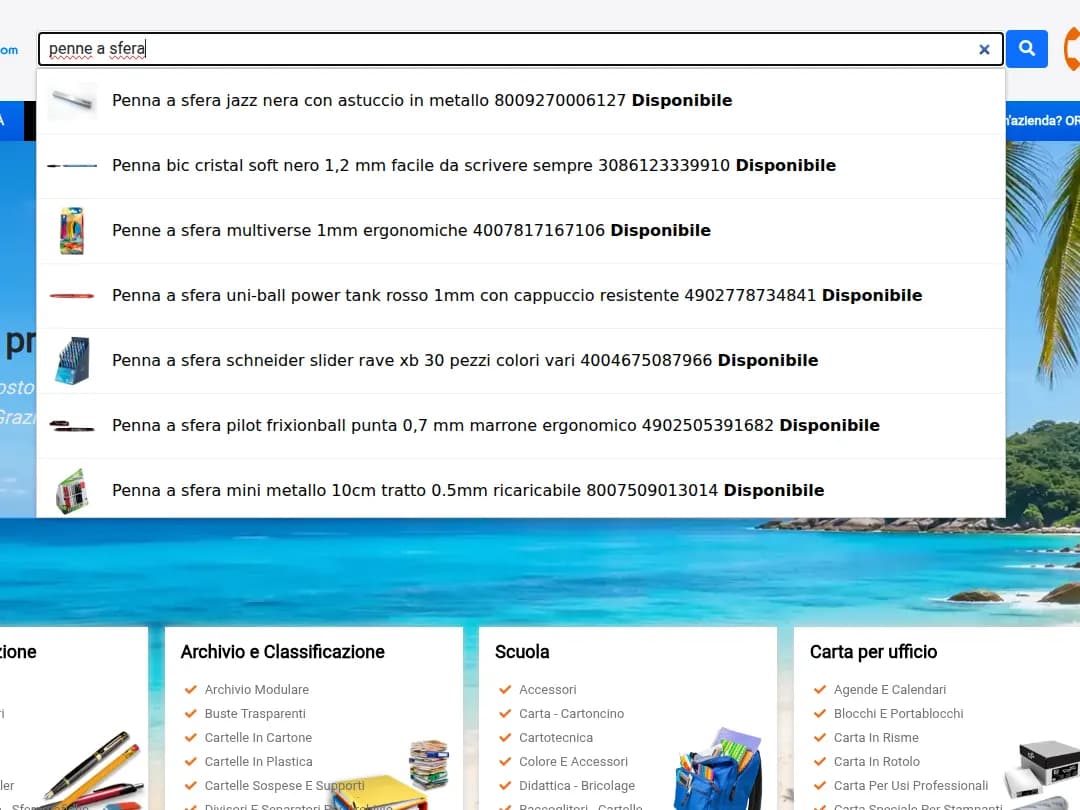
A search function that collapsed. The platform's built-in engine queries the database with expensive queries on products and metadata: under a catalogue of this size, results came back slow and poorly relevant, and the load slowed down the rest of the site. We moved search to Elasticsearch, in a Docker container, connecting it to WooCommerce through ElasticPress: separate index, continuous synchronization, autosuggest on the search field. We cover it in Elasticsearch and search across over 280,000 products.
Five platforms, sixteen years of URLs. Each platform had written its URLs its own way. Before every migration we took stock of the existing URLs (logs, Search Console, previous sitemaps, backlinks) and built the redirect rules, canonicals and sitemaps so that rankings would not be scattered. The method is in the deep dive on the SEO migration of an e-commerce store with 16 years of URLs.
Price lists that don't speak the same language. Different suppliers and warehouses, different formats, overlapping codes, changing stock levels. The ERP we developed normalizes the data, applies the publishing rules, updates prices and stock towards the site and the marketplaces, and handles errors instead of letting them through. We tell that story in catalogue, warehouses and a proprietary ERP.
Thin product pages, and too many to write by hand. When the catalogue stood at around 160,000 items, the estimate for generating product pages with commercial artificial-intelligence APIs exceeded €30,000. We chose to build the pipeline in-house with Hector AI, bearing only the energy and server costs: attribute normalization, generation of titles, descriptions and keywording, checks before publication. The case is in Hector AI and product pages.
Performance on a site that changes every day. The pages of such a vast catalogue can neither all be pre-generated nor served from the database every time: the combination of Varnish and Redis, together with progressive work on images, rendering and metrics (desktop first, then mobile, with Lighthouse and Chrome DevTools) is what keeps the pages responsive. The real Google PageSpeed Insights tests, with desktop passing the Core Web Vitals and mobile still work in progress, are in e-commerce performance and Core Web Vitals.
The technologies
Proxmox VE and Ubuntu Server for virtualization; HAProxy, Varnish and Redis for entry point and caching; WordPress and WooCommerce as the sales platform; MariaDB for the data; Elasticsearch with ElasticPress, in Docker, for search; pfSense and Hector LIS for perimeter and monitoring; the proprietary TN Solutions ERP for the catalogue, marketplaces and repricing; Hector AI for data quality and product pages. Open technologies where they exist, our own software where the market offered only subscriptions we would have paid for forever without controlling them.
The results
- An e-commerce store with over 280,000 products and more than one million media files that remains manageable by a company, not by an IT department.
- A search engine that answers across the whole catalogue, with suggestions as you type, without weighing on the database.
- Five platform migrations in sixteen years with the legacy URLs mapped and redirected, rather than lost.
- Product pages generated and checked with Hector AI for around 160,000 items, with a significant increase in organic visibility and traffic in the following weeks and better indexing of long-tail categories and brands.
- Prices and stock levels aligned across suppliers, site and marketplaces from a single ERP, with proprietary repricing that accounts for margin and fees.
- An infrastructure in which every layer can be stopped, updated or enlarged without stopping the store.
Problem → solution
| Problem | Solution | Deep dive |
|---|---|---|
| One server for everything, with no room to grow | Proxmox VE with separate VMs per role; HAProxy, Varnish and Redis in front of WooCommerce | Infrastructure architecture |
| Slow, irrelevant search, database under load | Elasticsearch in Docker via ElasticPress, synchronized index, autosuggest | Elasticsearch and search |
| Sixteen years of URLs from five different platforms | Inventory, mapping, pattern-based and one-to-one 301 redirects, canonicals, sitemaps | SEO migration |
| Heterogeneous price lists from several suppliers and warehouses | Proprietary ERP: normalization, publishing rules, synchronizations, error handling | ERP and warehouses |
| Selling on marketplaces with margins to defend | Multichannel publishing and proprietary repricing (margin, fees, stock) | In the ERP case |
| Thin product pages, impossible to write by hand | Hector AI: attribute normalization, controlled generation, batch checks | Hector AI and product pages |
| Exposed perimeter of a site that sells around the clock | pfSense for segmentation, Hector LIS for detection and monitoring | In the infrastructure architecture |
| Heavy pages on a constantly changing catalogue | Multi-level caching and progressive optimization of images and rendering | Performance and Core Web Vitals |
Production, development, experimentation
An honest case study distinguishes what is running from what we are building.
In production today: WooCommerce, Elasticsearch search via ElasticPress, the Proxmox infrastructure with HAProxy, Varnish, Redis and MariaDB, the pfSense perimeter with Hector LIS, the proprietary ERP with multichannel publishing and repricing, the product pages generated with Hector AI.
In development: a new proprietary search engine, still on Elasticsearch in Docker but with an index and ranking designed by us rather than mediated by a plugin, built to use the attributes distilled by Hector AI; and a commercial version of Hector AI with a human operator in the loop, to assist the store's customers.
In future experimentation: a proprietary e-commerce platform, beyond the boundaries of WooCommerce, which we will begin experimenting with from December 2026. It is not in production and we do not present it as such: we write it here because it is the natural direction of twenty years of work on this project.
Conclusions
Initpc.it did not grow because at some point somebody bought a bigger platform. It grew because every time a piece reached its limit (the server, the search, the way price lists were handled, the way product pages were written) that piece was replaced with something designed for the next scale, without throwing away the rest and without losing the accumulated history. It is the same method we apply to our clients' projects: we describe it on the page about e-commerce development and design and, for the infrastructure side, in our server virtualization and business server support services.
If you have a catalogue that is becoming unmanageable, a migration ahead of you or a search function that no longer holds up, this case study offers a real precedent. The deep dives below go into the detail of each topic.
Project milestones
Twenty years of project, milestone by milestone
The certain dates are the ones we know; for the intermediate migrations what matters is the order and the method, not the year.
- 2006
The partnership begins
TN Solutions takes over the design and development of Initpc.it's systems, then an online store on osCommerce.
- Migrations
From osCommerce to Magento 2
Zen Cart, Magento and Magento 2 follow one another as the catalogue grows: at every step, data, images, customers and legacy addresses are carried over to the new platform.
- WooCommerce
The current platform
Fifth generation: WooCommerce behind HAProxy, Varnish and Redis, on Proxmox VMs separated by role. Search moves to Elasticsearch via ElasticPress.
- 2024–2025
Hector AI on product pages
With about 160,000 products, the estimate for generating the pages with commercial APIs exceeds €30,000: the pipeline is built in-house with Hector AI.
- 2026
Over 280,000 products
The catalogue passes 280,000 items. In development: the new proprietary search engine and commercial Hector AI with a human operator.
- Dec 2026
Experimentation
Start of experimentation with a proprietary e-commerce platform, outside WooCommerce. Not in production.
Technical deep dives
Technical deep dives of the Initpc project
Every topic that deserves its own reading has its own page: they stand alone, add detail, and never break the story.
- Every role in its own VMInfrastructure and virtualisation Proxmox VE, HAProxy, Varnish, Redis, Docker and MariaDB: every role in its own VM, with pfSense and Hector LIS on the perimeter.
- 280,000+ products indexedElasticsearch and search Why native search collapses on 280,000 products and how the dedicated index, in Docker, replaced it.
- 16 years of URLsSEO migration and legacy URLs Five platforms, sixteen years of addresses: inventory, redirects, canonicals and sitemaps at every platform change.
- Several suppliers, one catalogueBack-office system and warehouses The proprietary software that imports several suppliers' price lists, normalises data, publishes and syncs prices and availability, marketplaces included.
- 160,000 product pagesHector AI and product pages Attribute normalisation and controlled generation of titles, descriptions and keywording, with no external subscriptions.
- Desktop 95 · mobile in progressPerformance and Core Web Vitals The real PageSpeed Insights tests of 27/08/2026: desktop with Core Web Vitals passed, mobile work in progress with causes and work plan.
Live
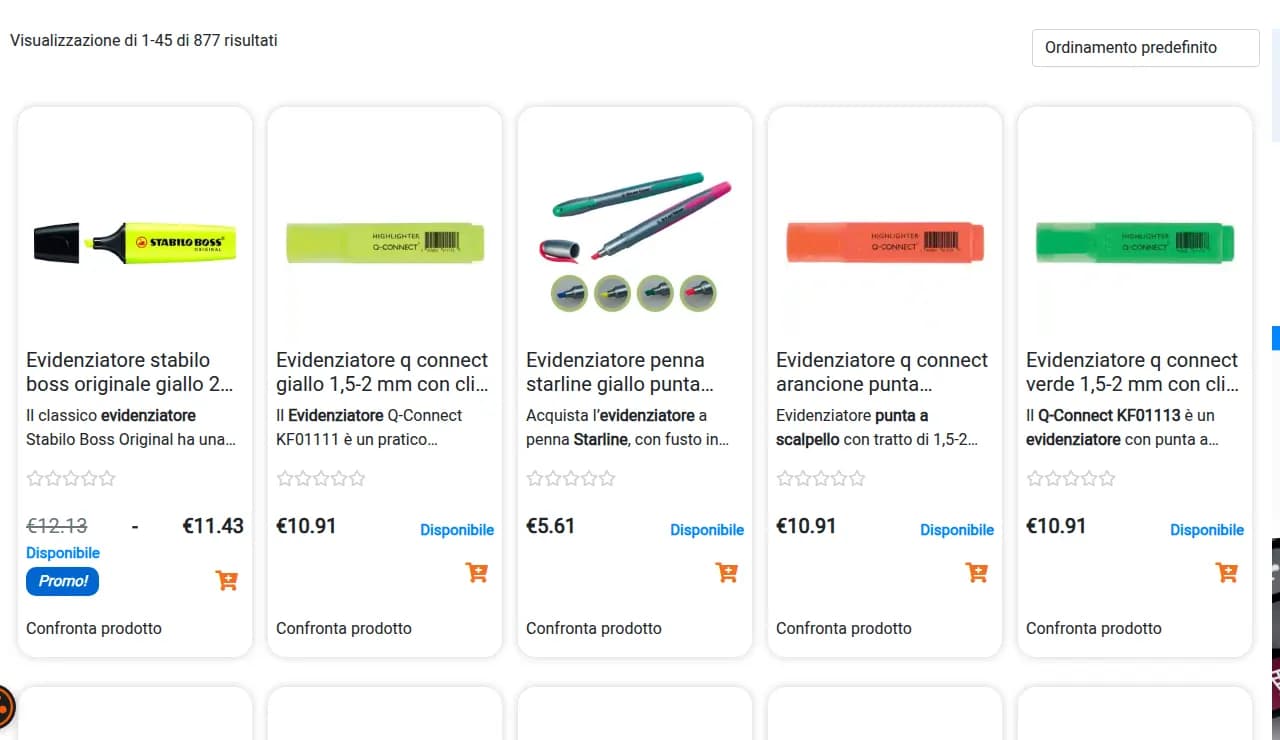
The project as seen on the site
Frequently asked questions
The questions we get about this project
Why does such a large e-commerce store run on WooCommerce rather than an enterprise platform?
Because the sales platform is only one of the layers. What makes the Initpc.it catalogue sustainable is what sits around and beneath it: the ERP that governs suppliers and prices, Elasticsearch search, the Varnish and Redis caches, Proxmox virtualization. WooCommerce does its part well (catalogue, cart, orders) and for everything else we have built or integrated dedicated components. A proprietary e-commerce platform will be in experimentation from December 2026, but it does not replace anything that is in production today.
How long has the collaboration with Initpc lasted?
The technical collaboration began in 2006 and continues today: twenty years, five sales platforms and a catalogue that has gone from a few thousand items to over 280,000. It is the client we have followed the longest, and it is also why this case study is split across several pages: each topic has enough history to deserve a deep dive of its own.
Can I apply the same architecture to my e-commerce store?
The individual components, yes, and we choose them according to real scale: not every store needs Elasticsearch or a custom ERP. The method, however, applies to everyone: separate the roles, put the cache at the right level, govern the data upstream of the platform, preserve the URLs at every migration. We always start with an analysis of the catalogue, the traffic and the existing systems, then propose a solution in proportion.
05 / Related services
The services behind this project
The case study proves the experience; these are the pages that explain the services we put to work on your e-commerce.


Related articles
More case studies
Is your catalogue becoming unmanageable?
Search that no longer holds up, price lists from several suppliers, a migration ahead: these are the problems we have already solved on Initpc.it. Tell us about your store and we will tell you where to start.
06 / Talk to an expert
Talk to the people who built the Initpc architecture
Tell us about your catalogue, your platform and what no longer holds up: we call you back within one business day.
A senior consultant reviews the situation with you — infrastructure, search, data management, migration — and proposes the solution proportionate to the real scale of your store, with no obligation.