

Windows Server vs Linux: Which OS for Your SMB Server
Windows Server vs Linux: a practical comparison of cost, licensing, security and use cases for SMBs, from an ISO 27001 certified B2B system integrator.
In this article
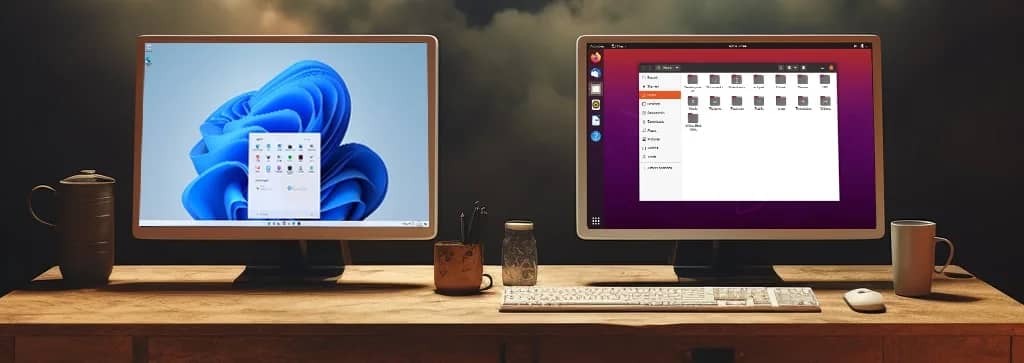
In the windows server vs linux debate there is no outright winner. Windows Server makes sense when you run Active Directory, Exchange or business applications certified only on Microsoft; Linux wins for web, databases, network services and containers, with zero OS licence cost. The right choice depends on the applications you need to run, not on personal preference.
Over more than 25 years as a B2B system integrator, TN Solutions has deployed and managed hundreds of servers for SMBs across northern Italy, both Windows and Linux, very often within the same infrastructure. This guide gives you a concrete comparison of the two operating systems, the real costs involved, the criteria for choosing by role, and how we make them work together cleanly.
Windows Server vs Linux at a glance: what actually differs
The question is not "which is better in absolute terms", but which is right for a given role. The two systems cover different jobs and, in most SMBs, they coexist.
Windows Server is Microsoft's server operating system. It is the standard when you need the Microsoft ecosystem: Active Directory (centralised management of users, PCs and permissions), file servers with SMB shares and NTFS permissions, print services, Remote Desktop Services, and the line-of-business applications that vendors certify exclusively on Windows. Administration is mostly graphical, through tools such as Server Manager, and the skills are widely available on the market.
Linux (in the server distributions most used in business, such as Ubuntu Server, Debian, Red Hat Enterprise Linux or Rocky Linux) dominates instead in infrastructure services: web servers, application servers, databases, DNS, proxies, VPNs and containers. The operating system licence is free, it is extremely stable for services that must stay up for months, and it is light on hardware. Advanced administration often runs through the command line, though many services also offer web panels.
The rule we apply in consulting is simple: you choose the operating system based on the application you have to deliver, not the other way round. A line-of-business app certified only on Windows ends the discussion; a website or an open-source database naturally points to Linux.
Cost and licensing: Windows Server vs Linux
Cost is usually the first thing SMBs put on the table, but it needs to be read carefully.
Windows Server is licensed on a per physical core model (with a minimum number of cores to cover per server and per CPU), plus CALs (Client Access Licences): one access licence for every user or device that uses the server's services. This means the cost grows with the number of users, and it is a line item you need to budget precisely from the very start.
Linux carries no OS licence cost in the community distributions (Ubuntu, Debian, Rocky). Enterprise distributions such as Red Hat require a support subscription per socket or per host, but it stays an order of magnitude below the sum of Windows Server plus CALs, and without the per-user charge.
| Aspect | Windows Server | Linux |
|---|---|---|
| Operating system licence | Per physical core + CAL per user/device | Free (community) or optional support |
| Cost grows with users | Yes (CALs) | No |
| Management interface | Graphical (Server Manager, GUI) | CLI + optional web panels |
| Core strength | Active Directory, Microsoft ecosystem | Web, databases, containers, network services |
| Hardware requirements | Higher | Modest, excellent on lean hardware |
| Skills required | Widespread, basic Windows | Moderate, basic Linux/CLI helpful |
Be careful not to stop at the list price: the total cost of ownership (TCO) also includes management hours, training, compatibility with third-party software (backup, antivirus, monitoring) and continuity of support. A Linux server with no licence but with nobody able to run it can cost more than a well-managed Windows box. The correct calculation is done on your company's real numbers, during an assessment.
Security and reliability compared
On security, the old idea that "Linux is safe and Windows is not" is outdated. Both systems, when patched and configured correctly, are robust; both, when neglected, become an open door.
Linux has a smaller attack surface in minimal installations (no graphical interface, only the services you need) and a granular permission model. Windows Server offers mature built-in security tooling: Defender, Group Policy (GPOs) to enforce rules across the whole network from a single point, and centralised update management via WSUS.
The real difference is not the operating system but the management: patches applied on a schedule, least-privilege access, network segmentation and a correctly configured business firewall matter more than the choice between Windows and Linux. Compliance with the NIS2 directive, for the companies that fall within its scope, requires these practices regardless of the platform.
On reliability, Linux is traditionally valued for long uptimes on services such as web and databases, where many updates do not require a reboot. Windows Server is equally stable in its roles, but some updates force a planned reboot. In both cases, real continuity comes from hardware redundancy and a proven backup strategy, not from the operating system itself.
Which to choose: decision criteria by role
Here is how, during consulting, we steer the choice based on the service.
Choose Windows Server if you need:
- Active Directory and centralised management of users, PCs and permissions;
- a file server with granular NTFS permissions and SMB shares for the offices;
- an ERP or line-of-business application certified only on Windows by the vendor;
- Remote Desktop to let several users work on a shared desktop;
- tight integration with Microsoft 365 and a hybrid environment.
Choose Linux if you need:
- a web server or application server (websites, portals, e-commerce, intranet);
- a high-performance database (MySQL, PostgreSQL, MariaDB);
- network services: DNS, proxy, VPN, reverse proxy and load balancers such as HAProxy;
- containers (Docker, Kubernetes) and development environments;
- a service that must stay up for a long time with a minimal hardware footprint.
In most SMBs the correct answer is not "one or the other": you use Windows for identity and business apps and Linux for web, databases and infrastructure services, on the same virtualised infrastructure. The golden rule stands: the platform is chosen after the assessment, not before. Only by knowing the applications, the number of users, the workloads and the dependencies can you size a server correctly.
Windows and Linux together, thanks to virtualisation
The factor that changes the whole picture is virtualisation. You do not have to pick a single operating system for the entire company: on one physical server, or a small cluster, a hypervisor runs several virtual machines side by side, some Windows and some Linux, isolated from each other.
This way an SMB can have, on the same hardware, a Windows Server VM with Active Directory and file server, plus several Linux VMs for the web application, the database and the network services. Each system does what it does best, without compromise and without wasting hardware. We cover this in depth on our dedicated server virtualisation page, where we explain how to consolidate multiple physical servers into a few efficient, redundant machines.
Beneath the hypervisor, a solid foundation always matters: correct RAID configurations, adequate storage, redundant power and a backup strategy with clear RTO and RPO targets. If you are also weighing up which hypervisor to adopt, our Proxmox vs VMware comparison may help: both host Windows and Linux without any trouble.
Why work with TN Solutions
TN Solutions is a B2B system integrator active for over 25 years, based in Melzo (Milan, Italy). We are certified ISO 9001 for quality and ISO 27001 for information security: server installation, configuration and management follow verified procedures.
We manage mixed Windows and Linux environments every day, from Active Directory to the web database, with a single point of contact for infrastructure, virtualisation and support. Our 37 Google reviews at a 4.7 rating reflect a practical approach, focused on operational continuity. We do not root for one operating system: we analyse the applications you need to run and choose the most suitable solution, whether that is Windows, Linux or, as is almost always the case, both.
Let's talk about your next server
Do you need to deploy a new server and aren't sure whether to choose Windows, Linux or a mixed solution? Our experienced engineers analyse your applications and your number of users, then propose the most suitable architecture, with transparent costs and no surprises on licensing.
Call TN Solutions on 02 9517550 or reach us through our contact page to request an assessment with no obligation.
Frequently asked questions
Is Linux more secure than Windows Server?
Not automatically. Linux has a smaller attack surface in minimal installations, but real security depends on management: regular updates, least privilege, network segmentation and a properly configured firewall. A well-managed Windows Server is safer than a neglected Linux box, and vice versa. The platform matters less than the procedures.
Can I run my business application on Linux?
It depends on the vendor. Many ERP and line-of-business applications are certified only on Windows Server and must be installed there to keep official support. Other applications, especially web-based ones, run natively on Linux. Before choosing the operating system we always check the software's official requirements: the application determines the platform, not the other way round.
How much does Windows Server cost compared to Linux?
Windows Server is paid per physical core plus CALs for every user or device, so the cost grows with the number of people who access it. Community Linux distributions have no licence; enterprise ones require low-cost support, with no per-user line item. A correct comparison, however, also includes management hours and the skills available in-house.
Do I need to know the command line to manage Linux?
For advanced administration the command line remains the main tool, but many services offer web panels that cover day-to-day operations. SMBs typically hand Linux server management to a partner, keeping only basic tasks in-house. Windows, by contrast, is managed mostly through a graphical interface.
Can Windows and Linux run on the same server?
Yes, through virtualisation. A hypervisor runs several isolated virtual machines on the same hardware, some Windows and some Linux. It is the most common configuration in SMBs: Windows for identity and business apps, Linux for web, databases and network services, with significant hardware savings and tidy management.
Technology partners





Want to discuss it with our team?
We analyse your infrastructure for free and propose the most suitable solution.